
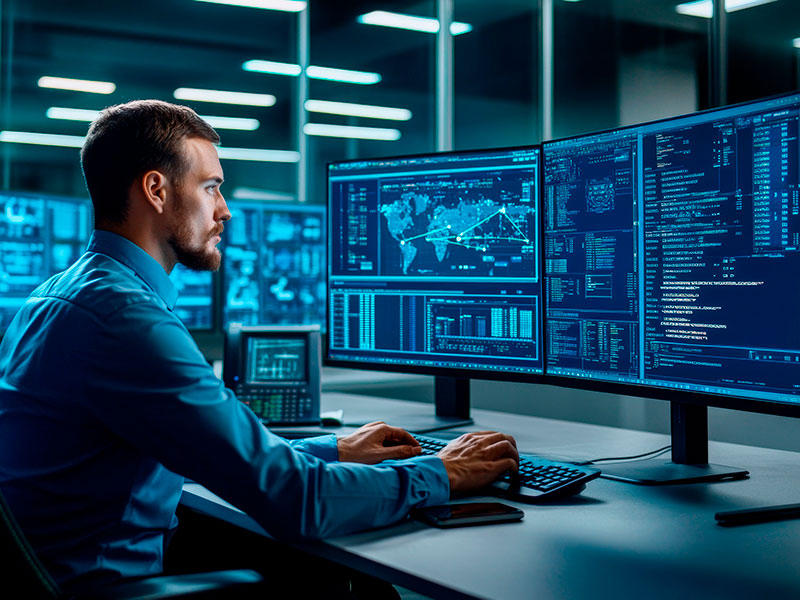
When we talk about cybersecurity operations centers (SOCs), we usually think of advanced tools, monitoring platforms, or automated analysis systems. However, behind all that technology lies an essential element that determines the effectiveness of digital defense: people.
SOCs operate in complex environments where thousands of security alerts are generated every day. Although technology allows for the collection and correlation of large volumes of information, the interpretation of this data and decision-making still depend, to a large extent, on the judgment and experience of the professionals who work in these centers.
The human factor is especially relevant when it comes to distinguishing between legitimate activities and potentially malicious behavior. Analyzing alerts, investigating incidents, and assessing their impact requires technical knowledge, analytical skills, and a deep understanding of the context in which these incidents occur.
Specialization and Teamwork
SOC Teams are typically composed of professionals with diverse and complementary profiles. Security analysts, incident response specialists, and threat intelligence experts work in a coordinated manner to identify risks and manage potentially critical situations.
This specialization allows incidents to be addressed from different perspectives and improves the quality of the analysis. Collaboration within the team also facilitates knowledge transfer and contributes to strengthening the collective capabilities of the SOC.
Continuous training also plays a key role. The techniques used by malicious actors are evolving rapidly, so cybersecurity professionals must constantly update their knowledge to adapt to new scenarios and challenges.
Reacting to complex situations
Cybersecurity incident management doesn't always follow predictable patterns. Often, analysts must interpret ambiguous signals, correlate information from different sources, and make decisions under pressure.
In these contexts, accumulated experience and professional judgment are crucial. SOC teams not only apply technical procedures but also contribute a strategic vision that allows them to prioritize risks, assess potential impacts, and define the most appropriate response.
Although automation and advanced tools play a fundamental role in today's SOCs, the human element remains irreplaceable. Analytical skills, collaboration among professionals, and expert judgment are elements that no technology can fully replicate.
In this sense, the effectiveness of a SOC depends not only on the tools it uses, but also on the talent and training of its staff. They are the ones who transform data into knowledge and turn monitoring into an active defense against cyber threats.